
2026
The TNQ Distinguished Lectures in the Life Sciences
Wolf Prize and Canada Gairdner Award Laureate
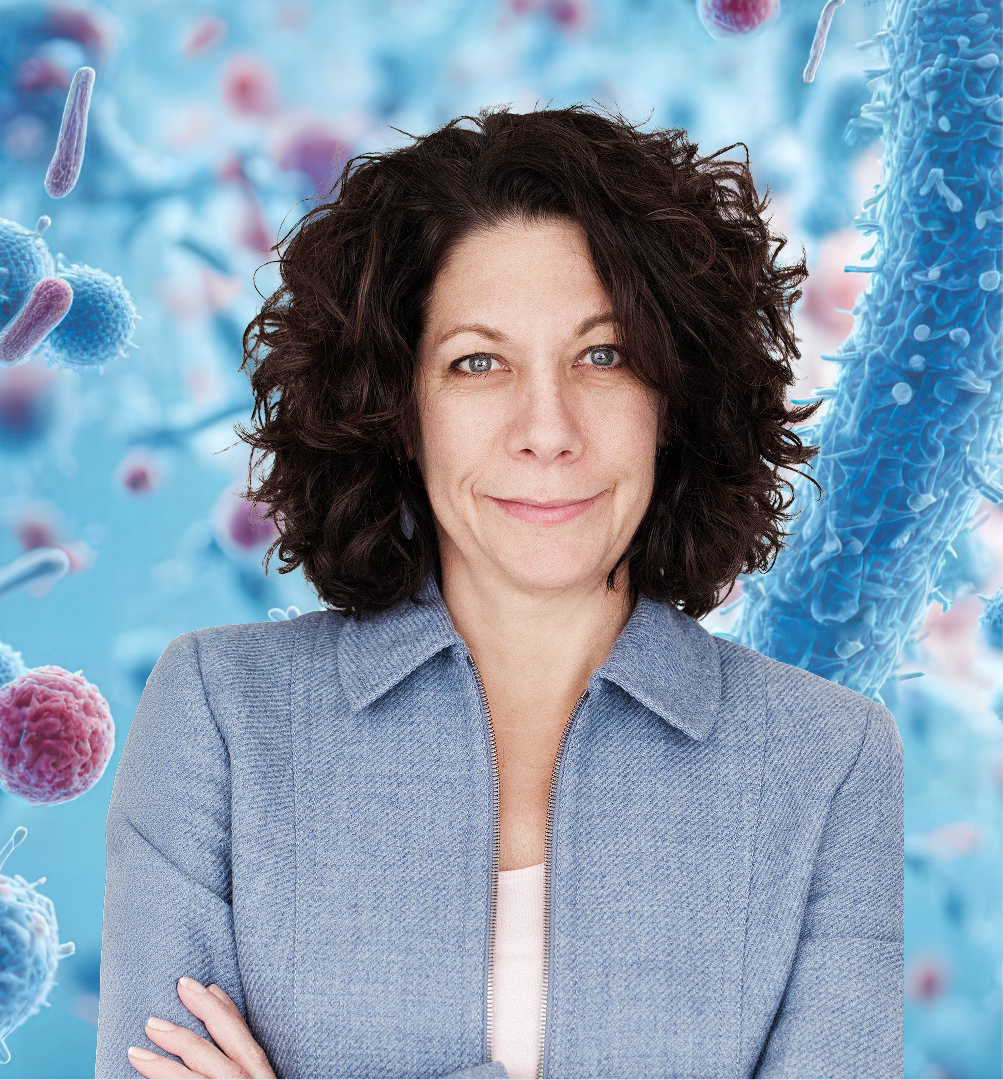
Bonnie Bassler
‘A Chemical Language that enables Communication
between Diverse Organisms.’
Professor Bassler is a renowned molecular biologist and professor at the Princeton University, where she works on quorum sensing—a process of cell-to-cell communication in bacteria.
This process enables bacteria to behave in a coordinated manner, much like multicellular organisms. Professor Bassler’s interest in microbial communication emerged in the 1990s, when, along with her team, she identified a system by which bacteria release and detect chemical signals to regulate gene expression in response to population density. Her work has deepened our understanding of bacterial behaviour and can potentially lead to new treatments for bacterial infections and novel ways to control harmful bacteria.
In addition to her research, Professor Bassler is an advocate for science education and public outreach. She is committed to mentoring the next generation of scientists and is passionate about increasing the representation of women in science. Professor Bassler has received numerous awards for her work, including being named a MacArthur Fellow. Through her discoveries, she has made a lasting impact on the field of microbiology and continues to shape our understanding of the microbial world.
About the Speaker
Bonnie Lynn Bassler was born in 1962 in Chicago, Illinois, and grew up in Danville, California. She received a BSc in Biochemistry from the University of California at Davis, and joined Saul Roseman’s lab at Johns Hopkins University for her doctoral work. She was awarded a PhD for her research on bacterial chemotaxis—the movement of bacteria in response to chemical stimuli. For her postdoctoral research in Genetics, she worked with Michael R. Silverman at the Agouron Institute, and in 1994, she joined the Princeton faculty. Today, Professor Bassler is a Howard Hughes Medical Institute Investigator and the Squibb Professor of Molecular Biology at Princeton University, where she previously served as Chair of the Department of Molecular Biology.
Innovation
Professor Bassler’s laboratory focuses on bacterial quorum
sensing—a bacterial cell-to-cell communication process. Her
group investigates molecular mechanisms in quorum sensing
through an interdisciplinary approach combining genetics,
chemistry, structural biology, modelling, and engineering. The
group has demonstrated how bacteria, through their signalling
molecules called autoinducers, can sense their own population
density, identify their close relatives and competitors, and
regulate their behaviour accordingly. Her research has also
shown that bacteria communicate with cells from other organisms
such as viruses and human cells through quorum sensing.
Such groundbreaking discoveries in bacterial quorum sensing have
advanced our understanding of the “chemical language” of
bacterial cells and their cooperation at the population level.
Professor Bassler’s work has opened avenues for developing
anti-quorum sensing therapies as alternatives to antibiotics. It
has revolutionised the field of microbiology and paved the way
for addressing major challenges in medicine and public health.
Professor Bassler’s research group
focuses on the following goals:
Investigating bacterial biofilm development, morphology and growth, and biofilm dispersal
Understanding molecular mechanisms that bacteria use for intercellular communication
Developing antimicrobial agents that target quorum sensing mechanisms in bacteria
Awards & Honours
2009
Wiley Prize in Biomedical Sciences
2011
Richard Lounsbery Award
2012
L’Oréal-UNESCO Women in Science for North America
2012
Elected to the American Philosophical Society
2012
Royal Society Fellowship Award
2013
Elected Member of the European Molecular Biology Organization (EMBO)
2014
Merck Millipore Alice C. Evans Award for Leadership in Clinical Microbiology, American Society for Microbiology
2015
The Shaw Prize in Life Science and Medicine
(jointly with E. Peter Greenberg)
2015
Howard Taylor Ricketts Prize
2016
Pearl Meister Greengard Prize and the FASEB Excellence in Science Award
2016
Max Planck Research Award, Alexander von Humboldt Foundation and the Max Planck Society
2016
Elected Member, National Academy of Medicine
2016
Elected Fellow of the American Society for Cell Biology (ASCB)
2018
Dickson Prize in Medicine
2018
Ernst Schering Prize
2020
Gruber Prize in Genetics
2020
Genetics Society of America Medal
2020
Feodor Lynen Award
2021
Paul Ehrlich and Ludwig Darmstaedter Prize
(shared with Michael R. Silverman)
2022
Wolf Prize in Chemistry
2022
Microbiology Society Prize Medal
2023
Albany Prize
(shared with Jeffrey Gordon and Dennis Kasper)
2023
Princess of Asturias Award
(shared with Jeffrey Gordon and E. Peter Greenberg)
2023
Canada Gairdner International Prize
(shared with E. Peter Greenberg and Michael R. Silverman)
2024
The National Medal of Science, U.S. National Science Foundation
Previous TNQ Distinguished Lectures
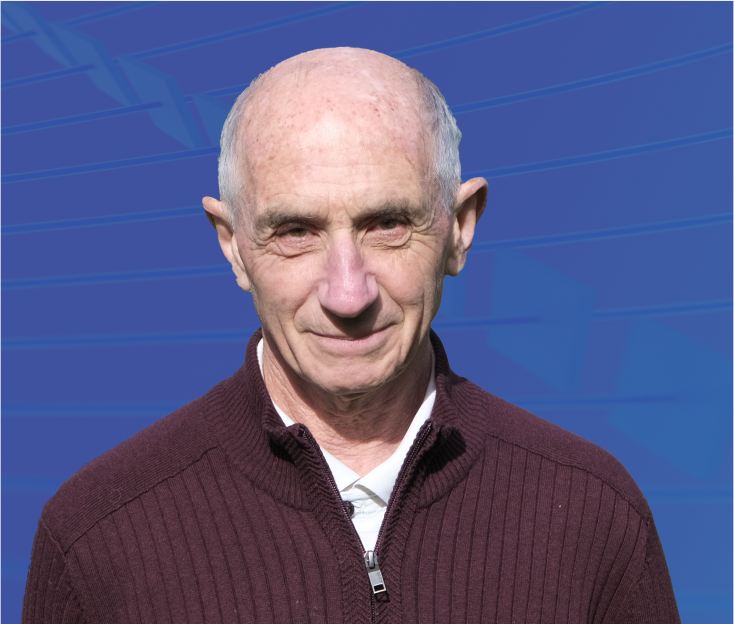
Yakov Eliashberg
The Strange and Wonderful World of Symplectic Geometry
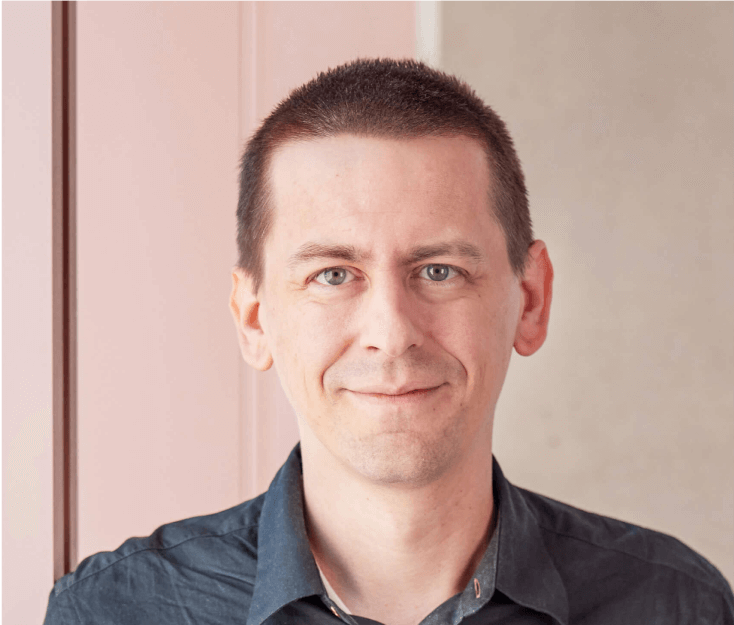
John Jumper
Highly Accurate Protein Structure Predictions: Using AI to Solve Biology Problems in Minutes Instead of Years
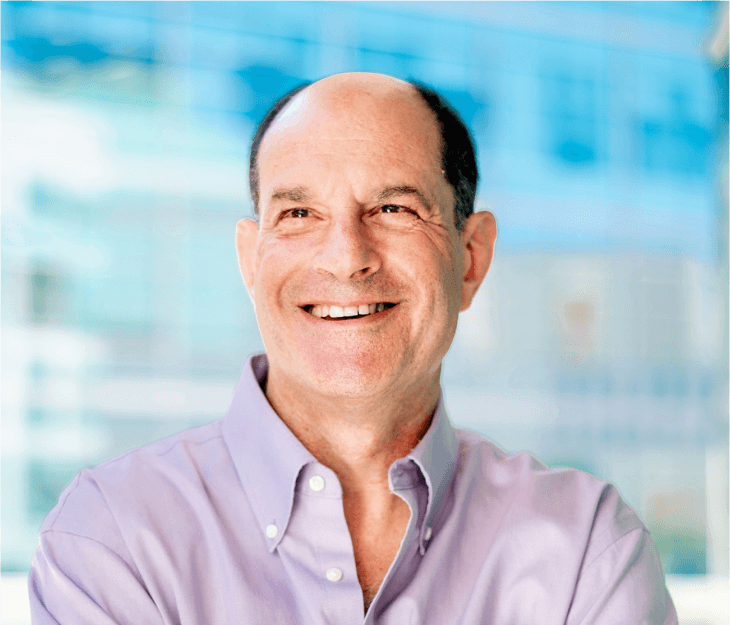
David Julius
How We Sense Pain