
A Literal Guiding Light towards Neuroscience
Karl Deisseroth, Peter Hegemann, and Georg Nagel have been announced as the 2026 Nobel Laureates in Physiology or Medicine “for their discoveries concerning light-gated ion channels and optogenetics.”

Rohini Karandikar
Consultant,
TNQ Foundation
07-October-2026
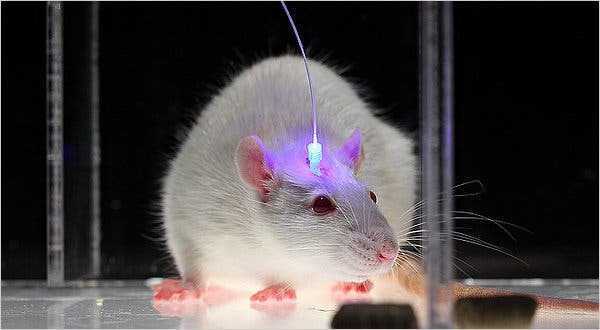
How does the brain create memories, generate feelings, and drive behaviour? Neuroscientists have long been intrigued by these questions. While scientists knew which part of the brain could produce a specific behaviour or emotion, the precise neuronal circuits underlying brain functions remained largely unknown.
Decades earlier, Francis Crick, who developed renewed interest in understanding human consciousness, proposed that light could be used to turn specific types of neurons on or off. However, he acknowledged the idea as “rather far-fetched” at that time.
The first clue of light controlling the behaviour came in the early 1990s from a unicellular microscopic green alga – Chlamydomonas reinhardtii, which swam towards a light source. Peter Hegemann, a biophysicist who observed this phototaxis, was curious to unravel how Chlamydomonas reacted to light so rapidly.
He studied the eyespot of Chlamydomonas, which is a light-sensing structure, and observed an electrical impulse just half a millisecond after light reached the eyespot.
What was it that responded to light at an astonishing speed in Chlamydomonas?
To answer this, Hegemann attempted to isolate and study the light-sensitive protein from the eyespot of Chlamydomonas. But there was a major challenge – the light-sensitive protein was unstable and vulnerable to damage. However, the gene sequences of several Chlamydomonas genes became available in the early 2000s. Hegemann collaborated with Georg Nagel, also a biophysicist, and zeroed in on two genes that were significantly similar to known genes that encoded light-capturing proteins.
Nagel cloned the two genes into frog eggs. The genes encoded proteins – ion channels – and were named channelrhodopsin-1 and -2. Among these, channelrhodopsin-2 responded to light, opened within 0.2 milliseconds, and generated an electrical signal.
A light-sensitive protein from a microscopic alga was cloned, expressed, and successfully showed its functionality in frog cells. The duo also expressed the gene in kidney cells of mammals, including humans.
The discovery of channelrhodopsin-2 in itself was a breakthrough and a perfect example of curiosity-driven research, laying the foundation for optogenetics in the early 2000s.
Enter Karl Deisseroth, who aspired to become a neurosurgeon. However, in his training at a psychiatric clinic, he was deeply moved by his patients’ conditions and their suffering. This sparked his curiosity about how the brain worked differently and caused such distress in humans.
Deisseroth obtained the gene encoding channelrhodopsin-2 from Nagel and cloned it into rat nerve cells grown in Petri dishes. The nerve cells expressed the protein and responded to blue light. Deisseroth, collaborating with other researchers, used light of different wavelengths to activate or inhibit neuronal activity and discovered additional light-responsive proteins.
Deisseroth’s group introduced the channelrhodopsin-2 gene in specific nerve cell types–this time in a live rat’s motor cortex. The researchers drilled a small hole in the skull, introduced a thin optic fibre to guide the light, and illuminated specific nerve cells present in the motor cortex. As soon as the light was shone, it triggered the rat’s whiskers to move. Further, the group also identified neuronal circuits involved in wakefulness in rats using optogenetics.
Karl Deisseroth, now a neuroscientist and a physician, coined the term ‘optogenetics’ in 2006 along with other researchers for this approach where light acts as a switch, turning neuronal activity on or off. Deisseroth was also the Featured Speaker at the sixth edition of the Cell Press-TNQ India Distinguished Lectureship Series in January 2016.
Optogenetics has revolutionised the field of neuroscience. Scientists can now identify, target, and manipulate specific neuronal circuits and regulate their activity in conditions such as autism, post-traumatic stress disorder (PTSD), anxiety, etc. Studies in rodents have also shown reduction of drug-seeking behaviour. The technique can be used for creating disease models for conditions such as visual impairment, schizophrenia, and other neurological disorders.
The applications of optogenetics are not limited to neuroscience; they extend to other areas such as cardiology and endocrinology and hold promise in creating precise intervention strategies.
Optogenetics has “illuminated” the path to establishing the link between neuronal circuits and brain function. More than just being a combination of optics and genetics, it enables targeting specific neuronal cell types with precision, genetic and temporal specificity, and reversibility – turning neurons on or off using light.