
TNA Distinguished Lectures
Using AI To Solve Biology Problems in Minutes Instead of Years
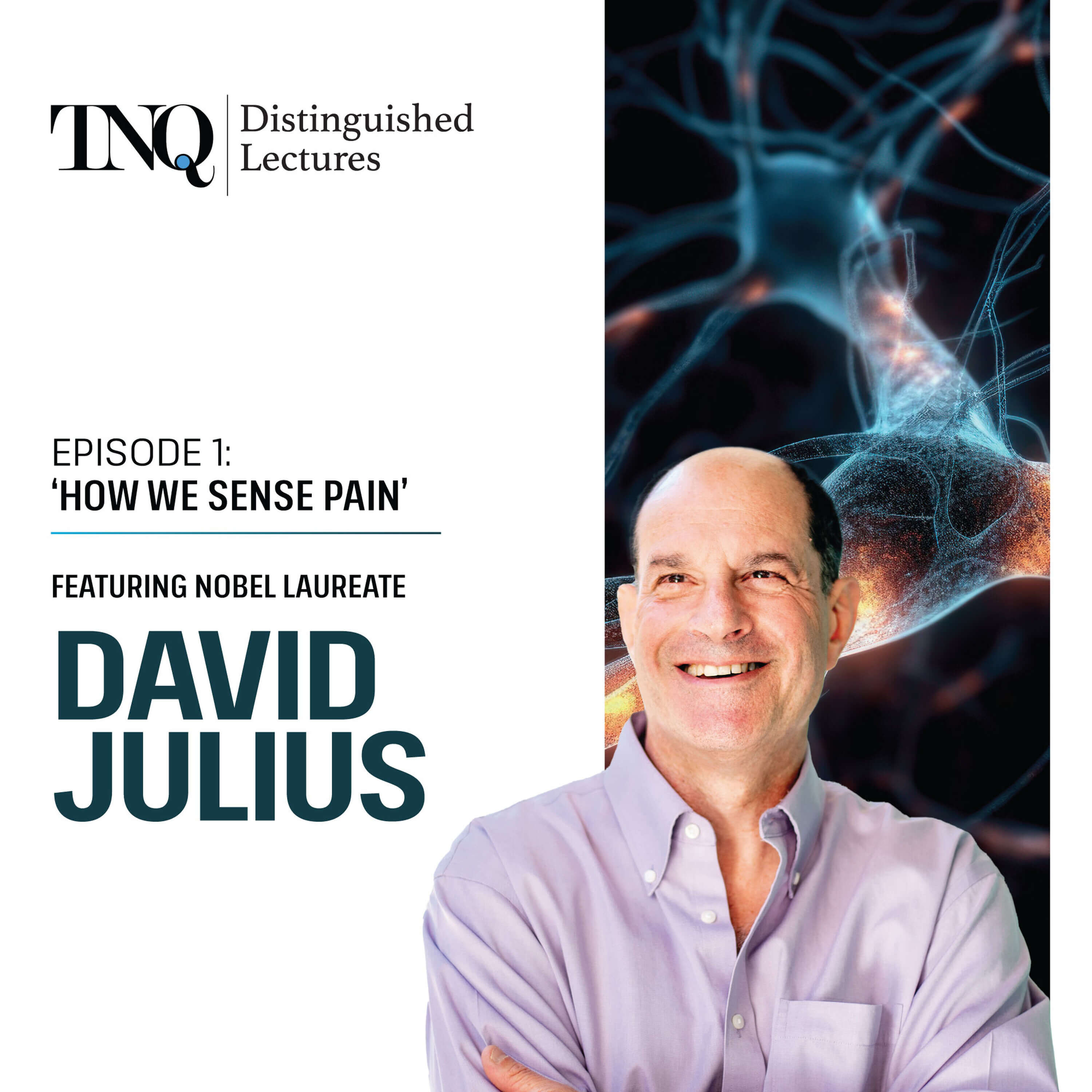
In this episode of TNQ Distinguished Lectures, Professor David Julius, a physiologist and Nobel Prize laureate, talks about his work on molecular mechanisms for pain sensation and heat including the characterization of the TRP-V1 and TRP-M8 receptors that detect capsaicin, menthol, and temperature. We get to know why birds don’t respond to capsaicin, thresholds for TRP receptors and whether they're affected by regional or racial differences, and his seminal contribution of the neural and molecular basis for the sense of temperature and pain.
Joining him in conversation is Ramaseshan Ramachandran, well-known science journalist and former science correspondent for The Hindu newspaper and Frontline Magazine.
CREDITS
Host: Dr Ramaseshan Ramachandran
Guest: Professor David Julius
Produced and Created for TNQ
Head of Production: Mae Mariyam Thomas
Project Manager: Shaun Fanthome
Producer: Sean D’mello, Ruchi Sawardekar
Sound Editor & Mix Engineer: Kartik Kulkarni
Other Podcasts

A Chemical Language that enables Communication between Diverse Organisms’
In this episode of TNQ Distinguished Lectures, Professor Bonnie Bassler, a molecular biologist and Wolf Prize and Canada Gairdner Award Laureate, talks about her work in quorum sensing – a process of cell-to-cell communication in bacteria.
The Strange and Wonderful world World of Symplectic...
In this episode of TNQ Distinguished Lectures, Yakov Eliashberg, a recipient of the Heinz Hopf Prize as well as the Wolf Prize in Mathematics, discusses his journey into
Using AI To Solve Biology Problems in Minutes Instead...
In this episode of TNQ Distinguished Lectures, Dr John Jumper, a recipient of the Breakthrough Prize, talks about his work on